What is the work of communicating with families?
Careful and sensitive communication between teachers and families supports student learning. Teachers communicate with families to learn more about children from the people who know them best. Teachers share information about children’s activities, learning, and development, and seek ways to partner with families. Communication may take place in person, in writing, or in phone calls. Every conversation with a family is a chance for the teacher to communicate a respectful, open attitude and create a space for a two-way conversation. Teachers must be attentive to considerations of language and culture, respectful and valuing of families, and oriented to working with families to support children.
How can communicating with families advance justice?
Teachers can partner with families to access the specialized knowledge they have about their child including: a deep understanding of their strengths, what they care about, conditions for how they learn best, and expertise about home culture and family life. Communication offers opportunities for teachers to learn about a child’s past experiences in school, how different family members have experienced school themselves, the goals families have for their children, and ways to best support children based on families’ knowledge. Talking with families opens doors for teachers to see their students as whole, multifaceted human beings. Without careful consideration, communication with families can reproduce patterns of injustice in home-school relationships.
What are the elements of the practice?
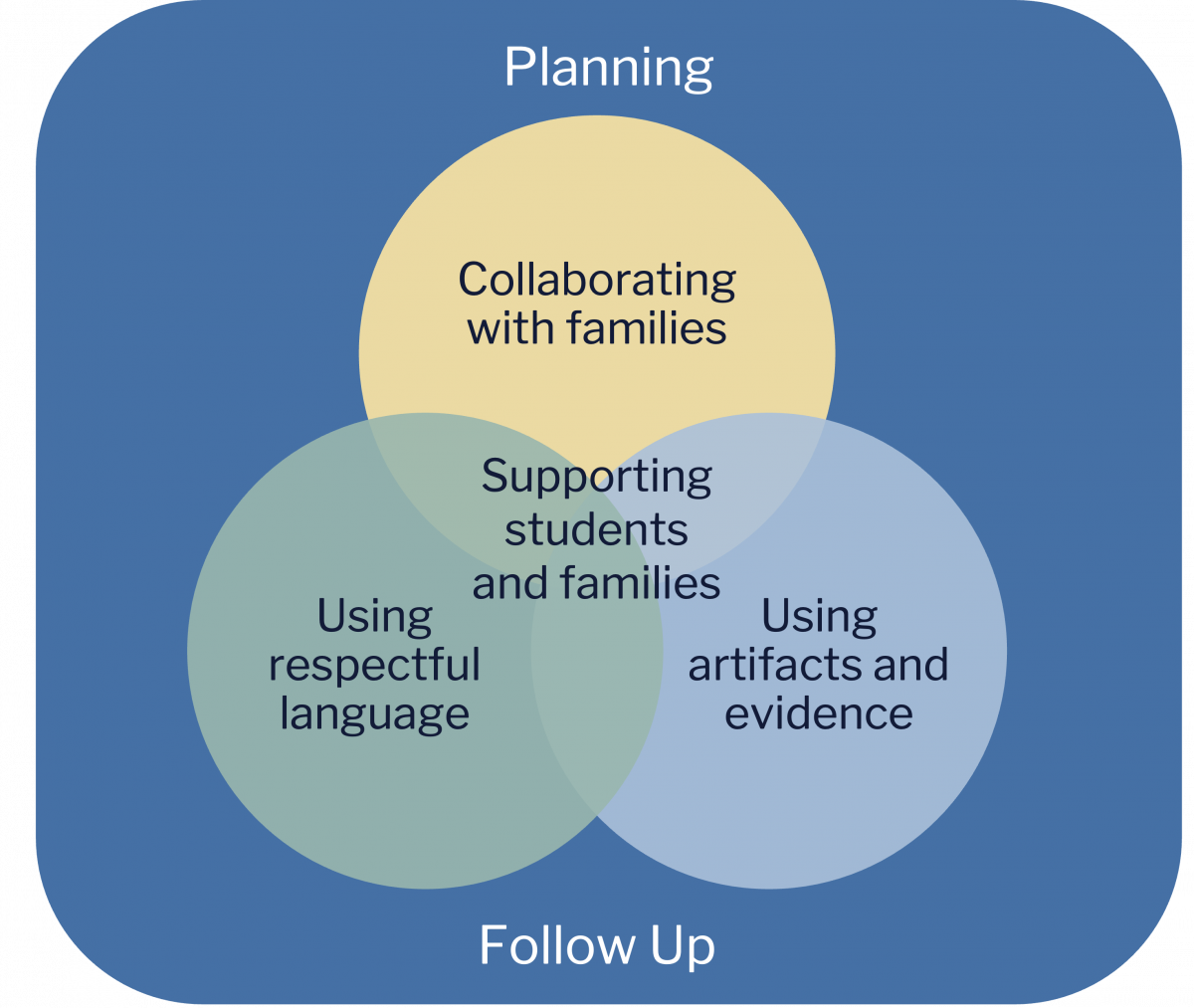
The diagram below breaks down work that teachers do when they are communicating with families. This breakdown, or decomposition, helps teacher educators to break down the practice into a set of parts that can be observed and practiced.
